


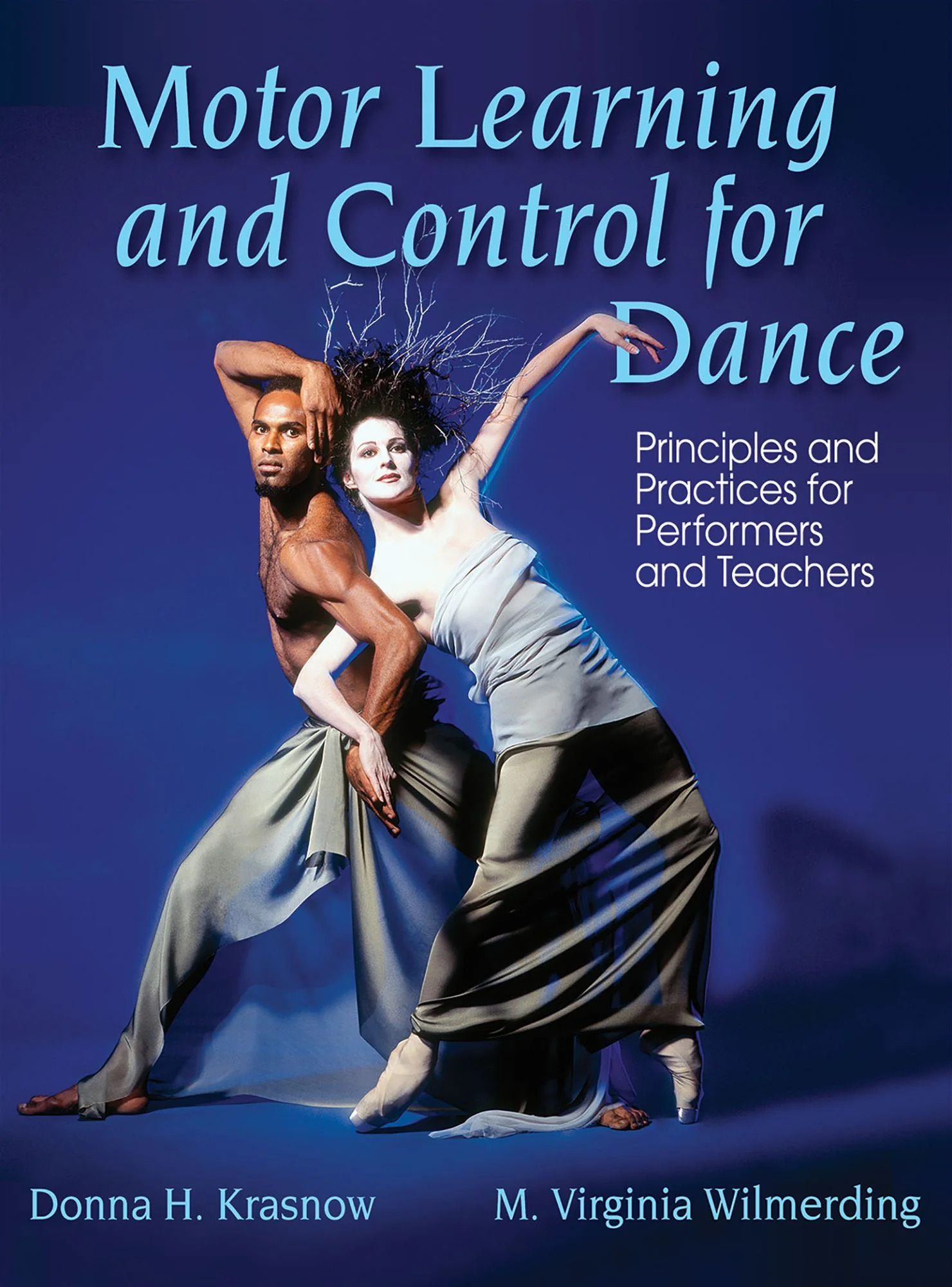
These are my top highlights from the book! I always type up my favorite bits to keep the good stuff fresh in my mind. Enjoy!
I’m already so surprised about the amount of parallel to other activities I’ve found in this book. Mindfulness is mentioned (heavy in yoga), Visualization is mentioned (heavy in sports).
Motor Behavior involves 3 things: Motor Development, Motor Control, and Motor Learning.
Motor Development involves ongoing change in movement function and ability, it examines these changes throughout the stages of life, and the developments are progressive and irreversible, and they result from changes within the person as well as from environmental interactions.
Motor Control explores how the nervous system organizes and directs the muscles and joints to produce coordinated movement, and how sensory information from the body (such as vision and hearing) and from the environment is used to accomplish this task.
Motor Learning examines changes in a person’s skill capabilities that are cause by experience or practice.
An understanding of motor control gives insight into how dances perform elite skills, which allows educators to teach more effectively.
Glenna Batson defines 3 area of exploration in the somatic process: novel learning context, sensory attunement, and augmented rest (slowing down in order to focus attention on sensory information such as breath and muscle tension. It incorporates periods of rest into physical activity to assist in learning and retention of material and in processing new information). This process can permit the nervous system to reorganize habitual patterns of muscle user that are interfering with effective movement. Sensory attunement focuses awareness on how one is doing the movement and not eh shifting focus from the external references such as mirrors to the internal perception of movement.
The Alexander Technique is not a set of specific exercises, but a way of observing one’s patterns in daily life, also known as mindfulness. IT allows artists in many fields, including dance, to move with greater ease, balance, and coordination in any movement style or form.
The Feldenkrais Method is hands-on work also called Functional Integration of Awareness Though Movement (ATM) in which the practitioner guides the participant through gentle touch. Its main goal is to reduce pain and movement limits and to enhance movement range and capacity. the movements often resemble those of an infant, explored with reduced effort and with a sense of play.
Lulu Sweigard’s method called Ideokinesis is almost entirely on imagery and not on movement exercises. Mabel Todd suggested that reducing strain may minimize cause of injury to the body. She suggested that this visualization work be done with no movement to allow the neural system to eliminate unwanted tension. It can also be thought of as visualization and mental practice.
Irmgard Bartenieff called her movement exercises that emphasized body integration correctives or total body connectivity. They see the body as a while and acknowledge that all of the body parts constantly influence each other. Her series of exercises, called the Bartenieff Fundamentals, have become known as the Basic 6. They include two preparations (breath and rocking) and 6 exercises:
- Thigh lift (hip flexion)
- Pelvic forward shift
- pelvic lateral shift
- Body half
- Diagonal knee reach (knee drops)
- Arm circles with diagonal sit-up
With all the above techniques, the goal would be to explore a variety of approaches and select the one that is most beneficial to you.
Yoga and Tai Chi, and Qi Gong are also advantageous for dance training because they focus on breath, self-awareness, balance, slowing the pace of movement, and alignment.
Pilates emphasizes spinal and pelvic alignment, breath work, core support, and improved coordination.
The physical facility of the dancer–flexibility, strength, endurance, joint structure, and general fitness–is certainly crucial, but how the brain and body speak to each other is essential to the dancer’s capacity for movement and the dancer’s ability to learn new movement patterns.
Even though adults are still capable of crawling, the structures of their lower extremities encourage walking instead. This is called soft-assembled rather than hardwired, because people do still have the flexibility to make choices if they want to alter their patterns of locomotion. Another way of saying it is that people are attracted to certain movement patterns rather than others, but the choices remain. You can still choose to crawl if you want to do so or if the environment compels this action (such as getting underneath a fence).
If a dancer is seriously injured, he may decide that normal walking up a flight of stairs is not possible, and he may alter his locomotor pattern to step up with one foot and then step together on that stair.
Rate limiters include muscular and skeletal systems, the sensory systems, or motivation. Because the various systems do not all develop at the same rate, any one of the systems might slow down the emergence of a motor pattern. A person will demonstrate a new skill, such as walking, when the slowest of the rate limiters reaches the appropriate level.
A dancer cannot achieve a turn on one leg until she can achieve the appropriate body and limb and position needed for the turn. Rate limiters can work in reverse. When a system deteriorates to a critical point, movement function will be negatively affected. For example, when arthritis in the hip develops to a certain extent in the older dancer, high leg extensions will no longer be possible, even if the muscles surrounding the hip have sufficient strength and flexibility.
One cannot study movement without considering the surrounding environment.
If a dancer is seriously injured, he may decide that normal walking up a flight of stairs is not possible, and he may alter his locomotor pattern to step up with one foot and then step together on that stair.
Many dancers do not realize that balance is happening every moment that they are dancing–and every moment they are not dancing as well.
This ability of the body to oppose gravity and balance moment by moment is called postural control. When dancers understand postural control, they can train more effectively.
Balance can be defined as the ongoing loss and recovery of equilibrium during dynamic movement.
Stability is the ability to maintain the center of mass over the base of support.
In women the center of mass lies in the pelvis, and in males it tends to be higher, toward the sternum.
When dancers and dance teachers refer to good posture, they are actually talking about alignment.
Teachers correct alignment not only because it looks great, but because it encourages efficiency and requires less muscular effort to achieve the task at hand.
In center work, the goal is to avoid having to take a step to regain lost balance, while in traveling work the intention is to achieve large steps, which can happen more effectively if the center of mass is falling off the base of support with control.
When attention becomes divides, effectiveness is greatly hampered.
Most experienced dancers would not achieve multiple turns if they thought about the placement of the gesture foot or the straightening of the supporting leg as they go from plié to relevé. Instead skilled dancers concentrate on elements such as the initiating push-off, spotting the environment, musicality, and the landing.
Internal focus refers to concentrating on the specific movement components of the task.
External focus refers to concentrating on the effects of the movements–the general outcome.
When performers at any skill level direct their attention to movement outcomes (external focus) rather than specific components, they achieve greater success. Considerable research supports this idea, but research studies are not unanimous.
One cause of performance anxiety is the tendency to revert to internal focus in the performance setting. When advanced dancers with high-level skills suddenly begin to focus on movement components and conscious movement control, skills decline.
Focusing on undesired result or action is counterproductive and is not the best way to achieve success. Dancers must learn how to replace the negative thoughts with positive goals and imagery. (Ex. instead of “Don’t lift your hip” say “When the leg is rising, imagines the Sitz bone on that side of the pelvis sinking heavily toward the floor.”)
Dancers may become more frequently injured as a result of attentional deficits. Teachers can reduce the complexity and difficulty of class material during times of increased stress leading to diminished attention, such as just before performances, if they want to minimize this.
Dealing with attentional deficits and learning to concentrate while avoiding distractions are paramount to the success of the performer in any discipline.
The speed-accuracy tradeoff states that when a person selects speed, accuracy is diminished; when a person selects accuracy, speed is diminished.
Error in creased as movement speed increase.
The dominant hand is more accurate than then nondominant hand.
At slower speeds, accuracy is greater with eyes open than eyes closed, but at very fast speeds, little difference exists because of the lack of time to integrate visual feedback.
Fitts’ Law states that the difficultly of the activity changes according to how much distance is between the two targets (called amplitude) and how wide the targets are. This is called the index of difficulty. The higher the index of difficulty, the more time it takes to complete the task. This time can be reduced with practice.
It is not uncommon for teachers and choreographers to practice fast phrases at a slower tempo, then gradually increase tempo as the dancers become more adept at the steps. Sometimes the faster version of a movement is actually a completely different Generalized Motor Program (GMP). Walking and running are different GMPs.
Think of a slashing arm movement from the front to the side. The faster the dancer does the arm slash, the less accurate the point of arrival will be. In fact, when practicing new, fast material, accuracy should be emphasized first, then speed added later. If dancers begin at high speed with little accuracy, it is unlikely that accurate movement will develop.
Children exhibit the same speed–accuracy trade-off as adults. Also, studies with feet, arms, hands, and fingers follow the same principle. Fitts’ law applies underwater, in outer space, and when movements are so small that they must be magnified in order to be seen. It applies when movements are being imagined and not actually being executed. This result might suggest that when dancers mentally practice fast movement, it may be beneficial to visualize the skills slowly in the beginning stages of learning.
The temporal speed accuracy trade-off states that as movement goes faster, timing accuracy actually improves. If the dancer were asked to do a series of slow développés without music, more variation would exist in the timing from one to the next.
Negative asynchrony is when the movement and sound systems are not synchronized. It is greater in musically untrained people. Novice dancers learn to be more accurate in their ability to stay on the music.
When novices start to learn a new skill, they unconsciously reduce the available degrees of freedom to make the learning of the skill manageable. This phase results in stiff, rigid, and poorly timed movement. As the learner progresses, degrees or freedom that were frozen are gradually released. Note though: the general principle of initially freezing, and later freeing degrees of freedom may vary with high-level task acquisition.
If dancers are convinced that they cannot do a particular skill, it will have a negative impact on their ability to accomplish the task.
intrinsic motivation is generalized by internal factors such as a person’s curiosity, and it drives the person to continue exploring the task. If their reasons are exclusively because they have a desire to learn and improve, it represents intrinsic motivation, because the motive lies within them.
Extrinsic motivation comes from factors that lie outside the person, such as praise and criticism.
Teachers should strive for all of their dance students to reach a point of being intrinsically motivated. Intrinsic motivation drives people much better and further.
Younger children are more motivated by external reasons, such as family, friends, and teachers, while teenagers are more motivated by internal reasons, such as feelings of success and enjoyment.
When dancers practice skills with no motivation, the chances for improvement or progress are low.
It is not clear whether praise contributes to skill acquisition, but it us known that it functions as a motivational tool.
As I progressed through this book I realized most of it was just describing theories about learning, dance, etc. It was less concise than I had hoped for and I ended up skimming most all of the book past the first 2 chapters. I had gotten all I needed from my earlier read “The Art of Learning” and there wasn’t much more here for me to grab on to. On to the next!